



TL;DR
Brand trust is that gut-level confidence customers have that you'll do what you say you'll do, and do it consistently. According to a report from Edelman, 81% of consumers need that trust before they'll buy from a brand.
But do you know one of the earliest places you can earn this trust? That’s your link-in-bio page.
For many people, this page is the first moment they slow down and assess your brand. They look for signs of establishment, your online tracks, legitimacy, clarity, consistency, and access points to learn more about you.
These simple, central hubs get clicked from Instagram, TikTok, X, and elsewhere. They're often the very first owned space someone visits after discovering you on social.
Looks legitimate and detailed enough? Clients trust and stay. Looks rather shady and disconnected? They get skeptical and ditch midway.
In this article, we’ll discuss how these pages influence brand trust and how to build the right one.
What Are Link in Bio Pages?
Tom Rockwell, CEO of Concrete Tools Direct, defines a link-in-bio page as a centralized landing page that holds all the links you want people to see. This can include links from your social profiles, event tickets, website, booking or contact page, pioneer content, and payment or checkout links.
"Technically, a link-in-bio page integrates all your most important destinations together. That way, you can easily share one link on a single social outlet and still guide people to everything you offer, including dynamic updates,” Tom shares.
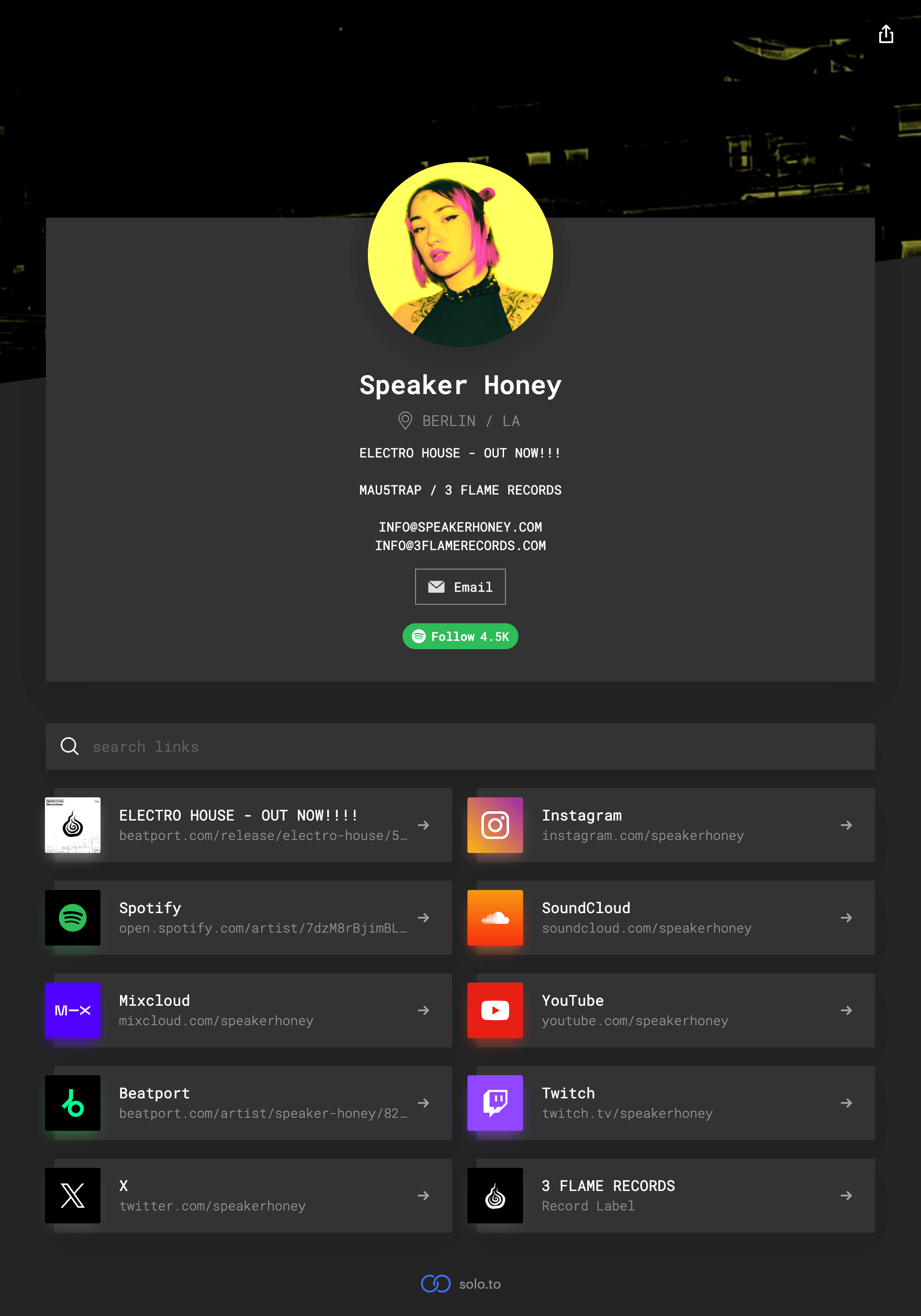
An example is SpeakerHoney, a music producer and artist. She used solo.to to create her link-in-bio page, which included all her socials, Spotify profile, contact details and much more. See the page below:
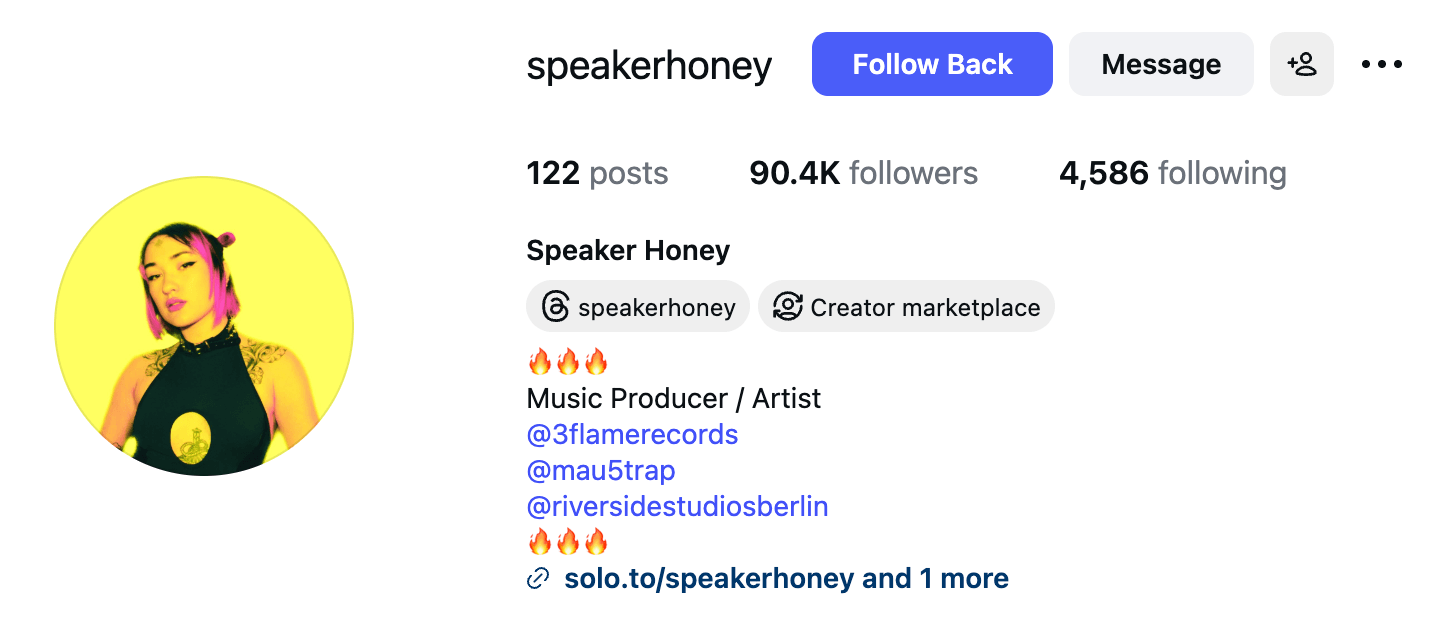
Then she inserted her unified bio link on each of her platforms, for instance, Instagram. When Instagram users click her bio link, they can access all the other social media platforms she uses to market her records.
Platforms like solo.to make this easy by helping you build a link-in-bio page that’s packed with simplicity and speed, clean layouts, straightforward customization, and a page that looks like your brand without a lot of fiddling.
How Link in Bio Pages Influence Brand Trust
Joern Meissner, Founder and Chairman of Manhattan Review, explains why centralized access points help prospects assess credibility more quickly by comparing bio link pages to portfolios.
“Link-in-bio pages are like your typical spreadsheet or website portfolio. In a typical portfolio, you include samples of your certificates, past contracts, success stories, testimonials, and deliverables.”
“When clients land on this portfolio, they go through all the elements of proof you’ve added to determine if you’re the right fit for their job. So, you can call your portfolio a golden page that largely determines whether you get hired.”
In fact, 21.5% of hiring managers trust portfolios or work samples.
Apply the same principle to link-in-bio pages.
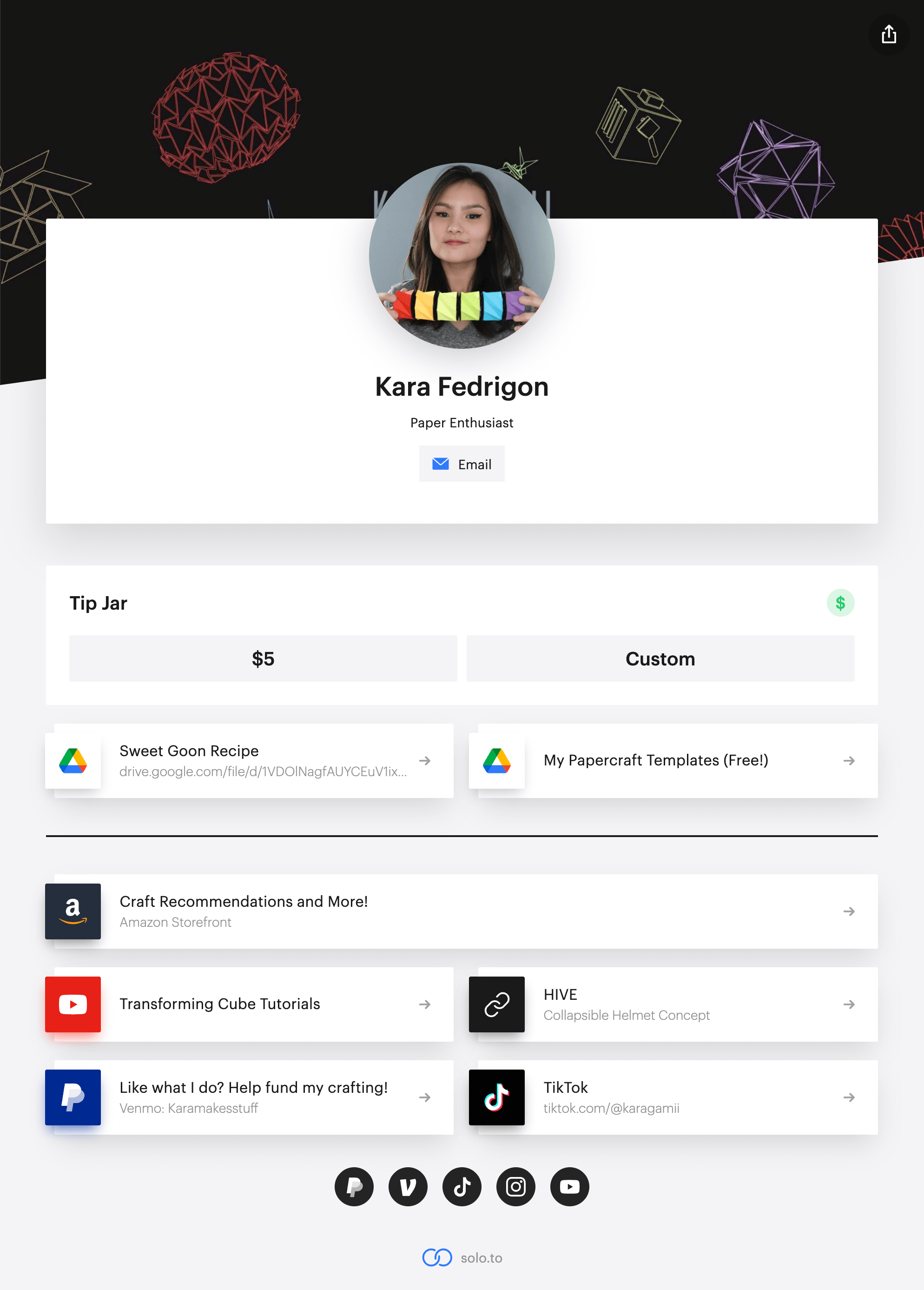
- They reflect your career trails, access to your most important samples like Kara, who linked to her YouTube tutorials, social media perspective, especially for a social media influencer and creator, and many more. All on a single page.
- This saves clients the hassle of switching between tabs just to gather enough info about you. Quick access to everything they need to know.
Brandy Hastings, SEO Strategist at SmartSites, also highlights how early touchpoints shape trust before conversion.
“The best happens when you take your time to build this page. Clean design, well-arranged details, and centralized info about what you do or who you are. Clients are convinced you can keep things organized and connected when they hire you, while customers trust you enough to make a purchase from you.”
7 Practical Tips to Build an Effective Link in Bio Page
Your link-in-bio page is often your first real test of credibility. Building it right is therefore vital. Here’s how:
1. Choose the right tool
Not all link-in-bio tools are built for the same purpose. Some focus on speed. Others focus on design. A few focus on helping solo creators and solo founders look credible without extra work.
Some common options you can use include:
- Linktree
- Beacons
- Carrd
- solo.to
Avner Brodsky, CEO at GoodWishes, says simplicity and goals matter when choosing a tool.
“If your goal is trust before conversion, choose a tool that stays out of the way and lets your links speak clearly. Look for an option that keeps things minimal, prioritizes clarity, and makes your page feel intentional rather than thrown together. That simplicity helps reduce doubt before the first click or purchase.”
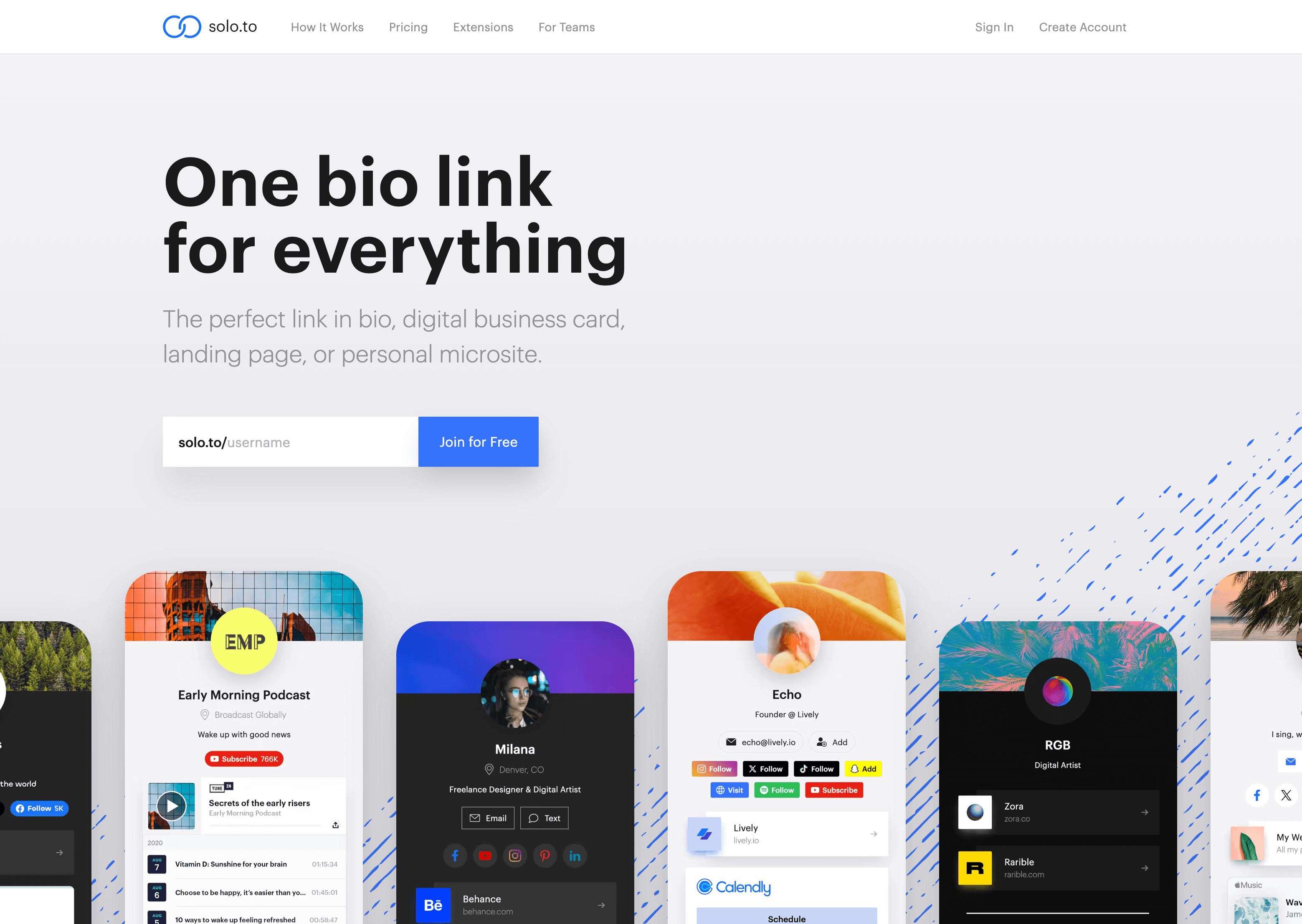
A perfect example is solo.to.
2. Prioritize good page design
Kos Chekanov, CEO of Artkai, which helps businesses build customer-centric products, explains how visual structure influences perceived professionalism.
“First impressions happen in seconds. If your page looks rough, it sends the wrong message, and most people see it as a red flag. On the other hand, a clean, well-organized page tells people you're professional and pay attention to detail. That’s why you should prioritize page design and usability before going live.”
Consider the following:
- Visual appeal and design quality: Use on-brand colors, crisp images, and legible text telling people you're intentional
- User-friendly navigation and accessibility: Place buttons where people expect them, clear hierarchy, and scannable sections
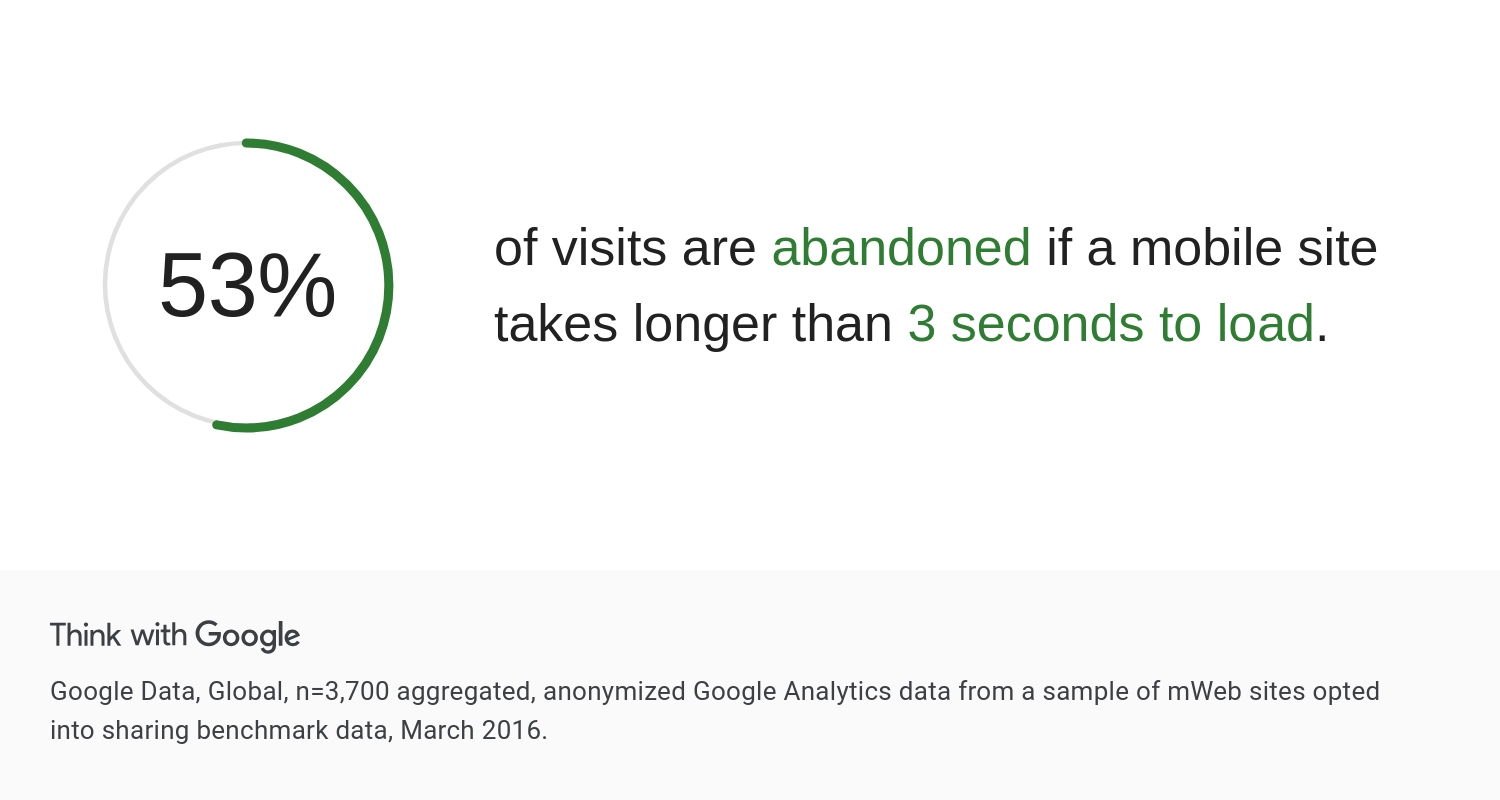
- Go light and avoid overstuffing to ensure fast page load times. 53% of mobile visits are abandoned if a site takes longer than three seconds to load
- Relevant and authentic content: A short headline that says what you do, links that match what you post about, and content that reflects your voice
Some link-in-bio tools require a heavy touch. If you’re not tech-savvy, you can contract a front-end developer from a virtual assistant agency to reduce cost. Or simply use platforms that come with built-in responsive, customer-centric design templates, like solo.to.
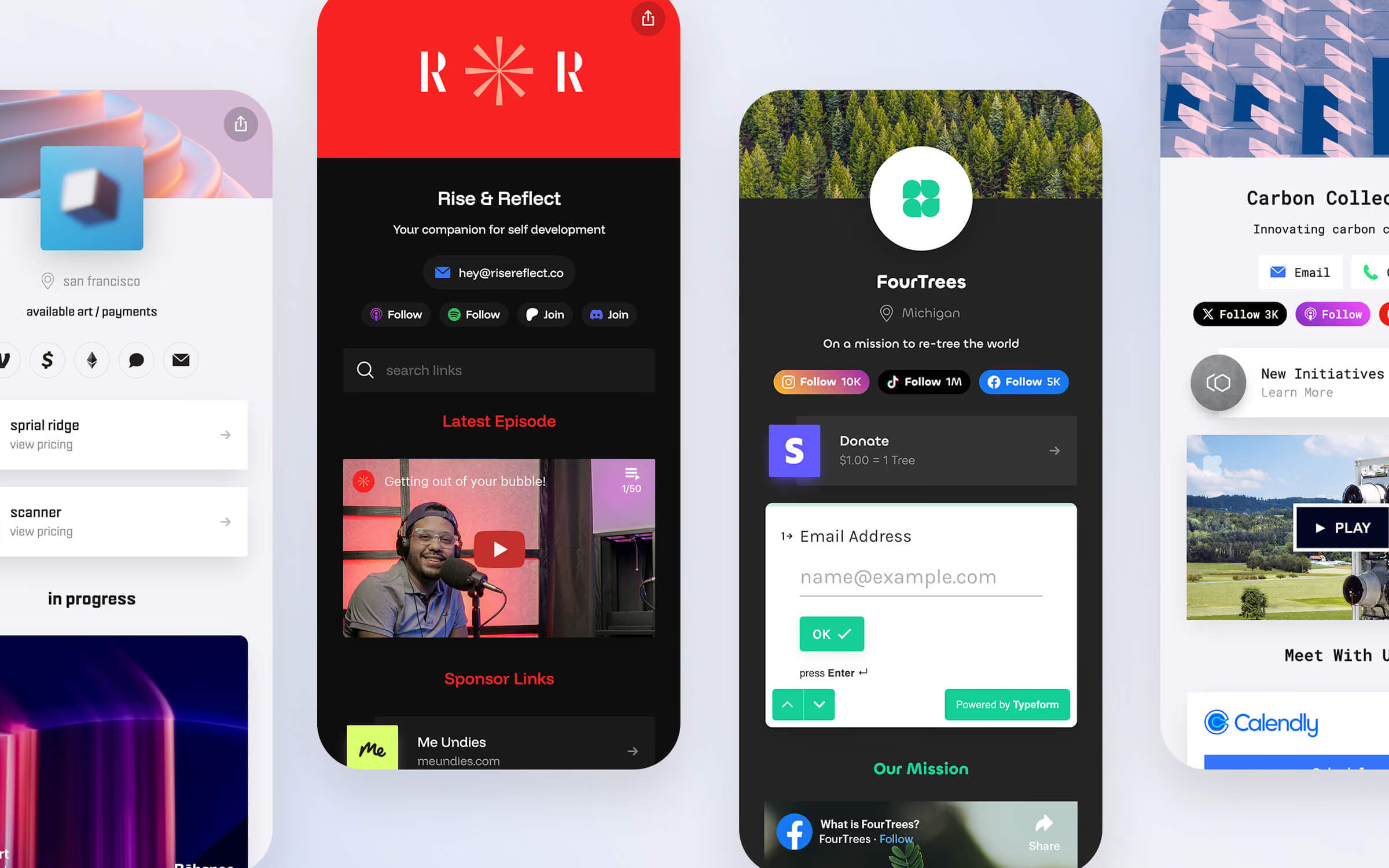
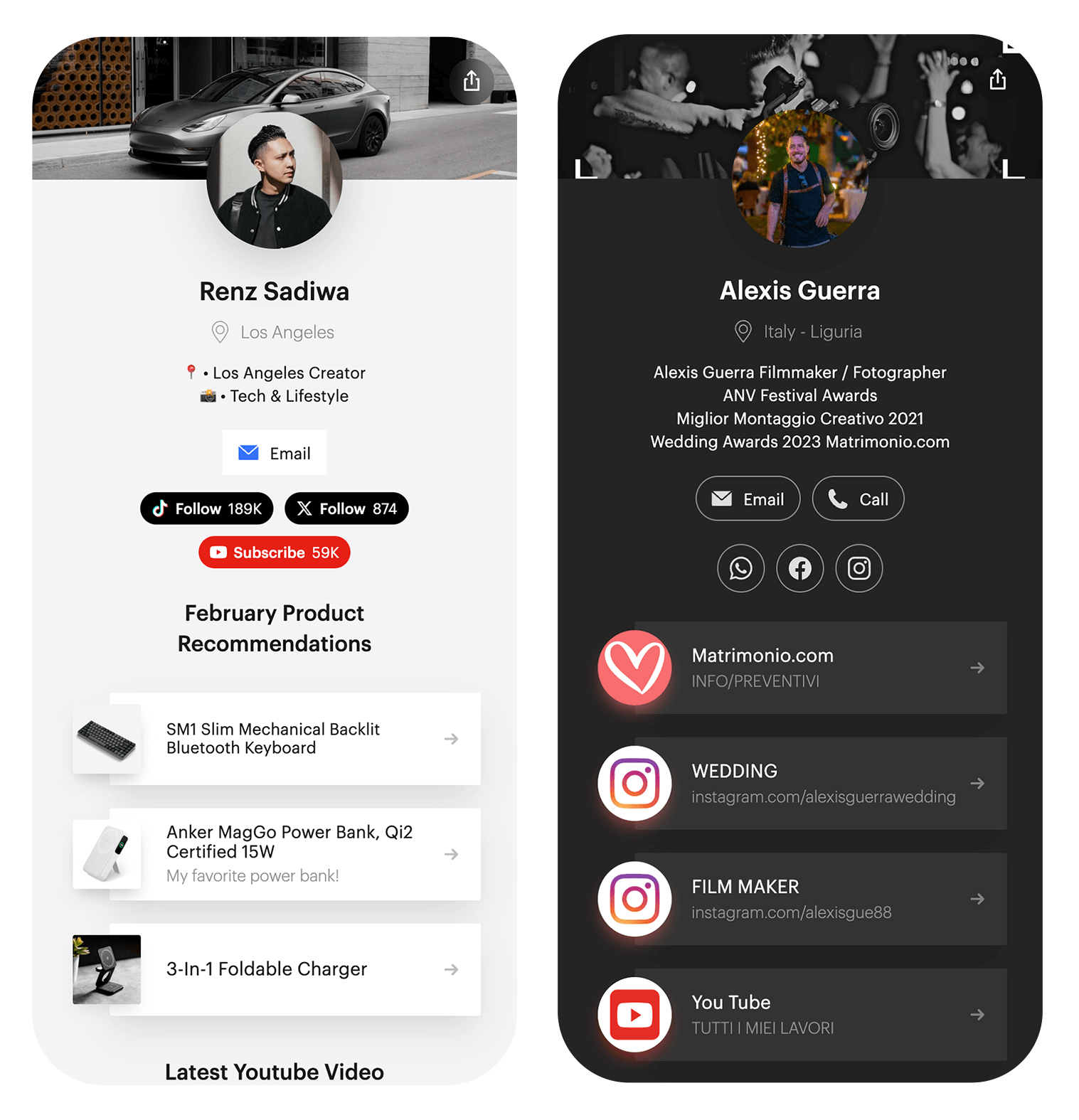
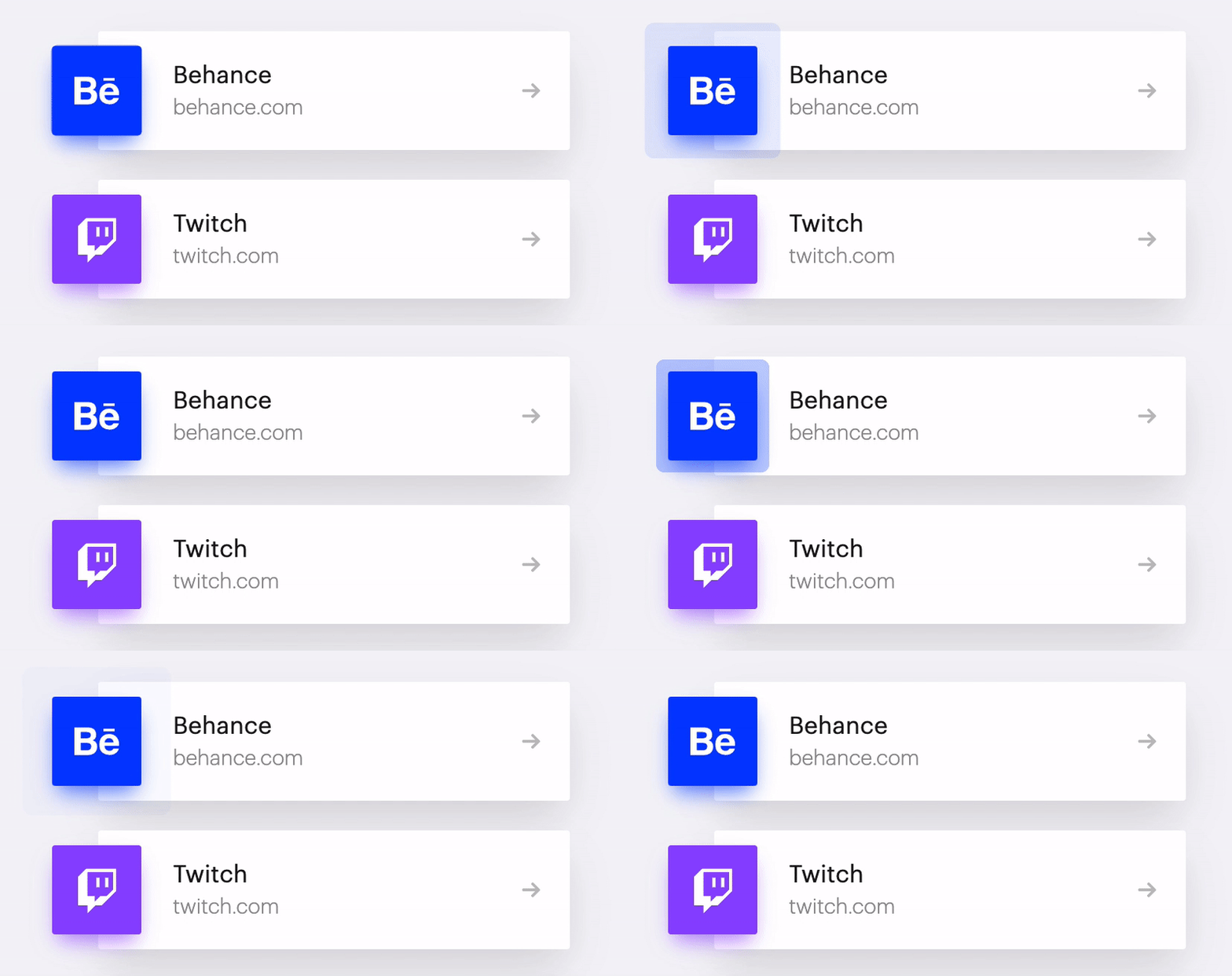
If you're looking for inspiration, check out solo.to built Alexis Guerra’s and Renz Sadiwa’s pages. solo.to also provides different themes which you can choose from, offers responsive page design, and bootstraps your page for customer conversions.
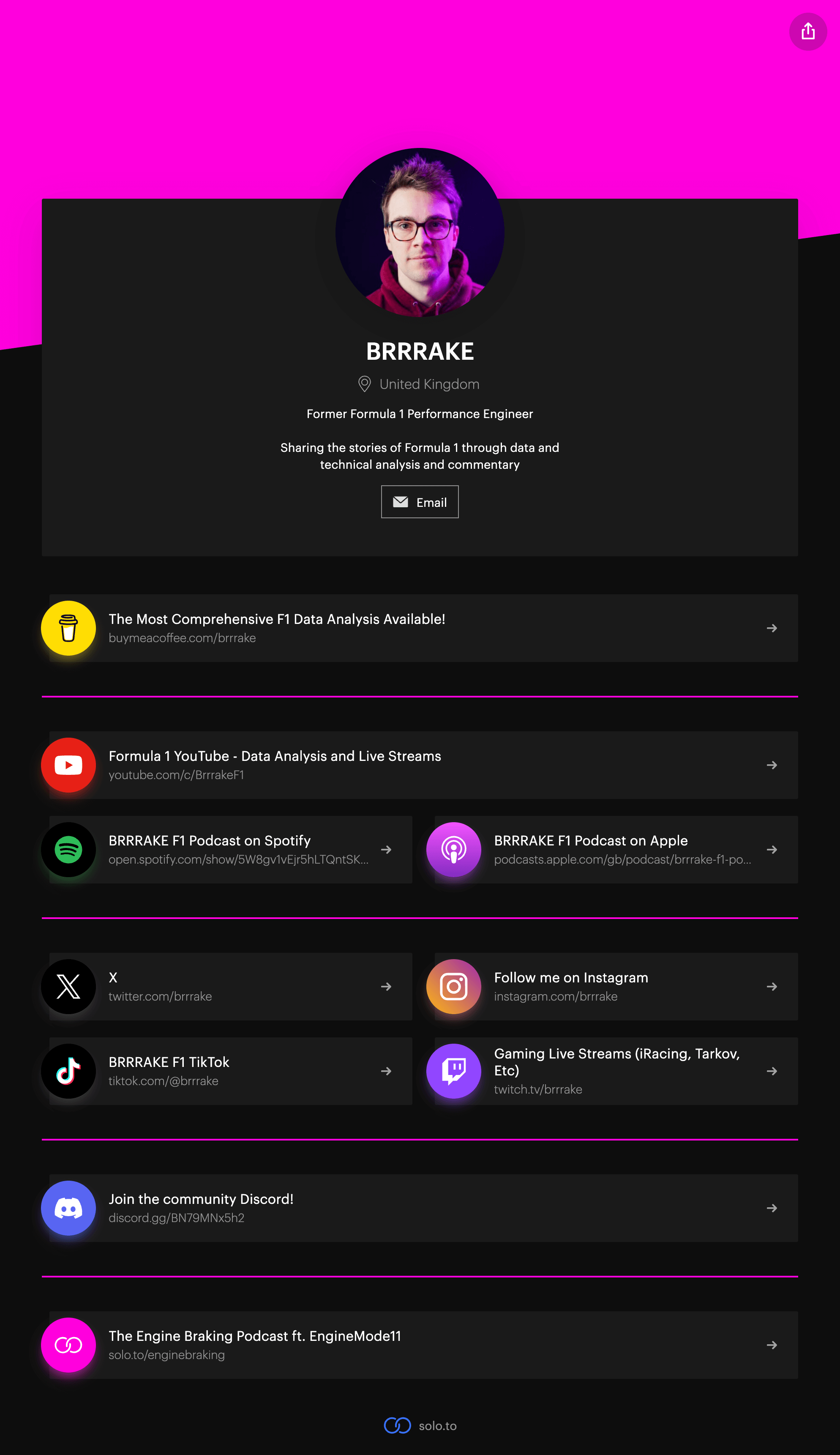
And sometimes, you can just keep it simple. See how Brrrake did that below.
Another thing to do is introduce animations, for instance, a pulsing beacon button. You can A/B test before full implementation.
3. Link to all important profiles
Use this section to help people quickly confirm who you are and what you do. However, do not treat it as a dump for every link you own. Things can get too crowded and push your clients away. Plus, how well you organized your page reflects your professionalism and organizational skills.
Here’s what you can link:
- Social profiles where you are active and recognizable, such as LinkedIn, Instagram, and Facebook
- Personal website or landing page
- Product or service page
- Booking or contact page
- Newsletter or community page
- Portfolio or case studies
- Payment or checkout link
- Videos and event tickets
Andrew Bates, COO at Bates Electric, believes specificity drives result than making your page a jack-of-all-services.
“If you need to add more details, a single page often falls short. For example, offering multiple services with many distinct handles on a single link-in-bio page can quickly confuse different audiences. Instead of forcing everything into one space, clone your page and create multiple focused pages, each built around a clear purpose.”
Take Bates Electric as an example. The electrical contractor service operates in multiple locations, and Bate has a different page for each location. This enhances proper targeting.
Follow the same approach when building your bio-link pages. Use platforms like solo.to to clone and create up to 5 new pages. All the pages use a unique link, and clients can navigate between them seamlessly when you link to each one from a main page.
4. Enable page analytics
Page analytics show you what people actually click after landing on your link in bio page. This helps you understand which links attract attention and which get ignored, so you can adjust the order and labels, or remove links that aren't pulling their weight.
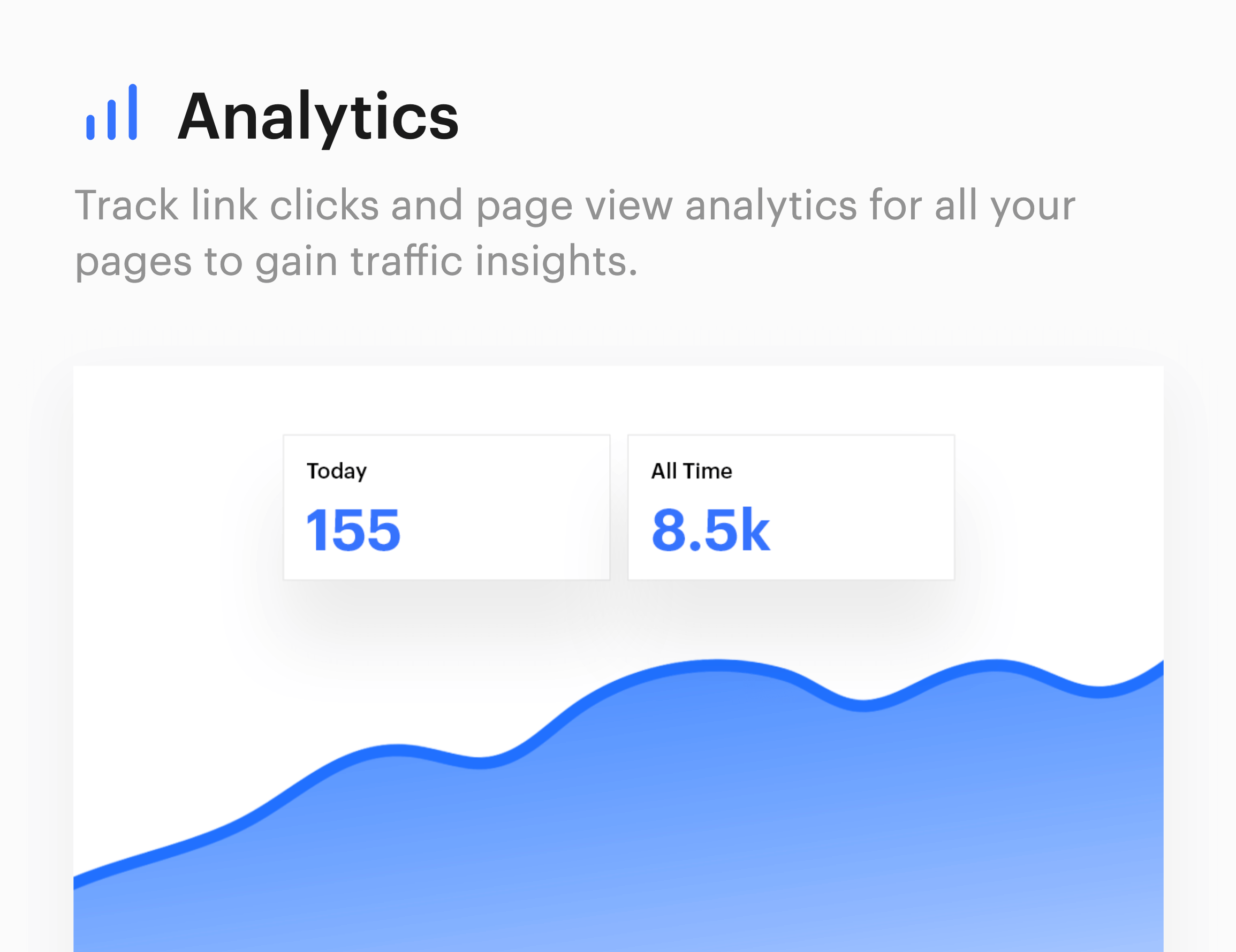
Focus on basic metrics like page views, link clicks, and click distribution. Avoid obsessing over advanced tracking early on, and go for clear KPIs that measure your page's success. If you need more trackable metrics tied to your page’s outcome, you can use solo.to.
If you’re running target ads to your page, you can leverage Meta Pixel or TikTok Pixel integrations in solo.to.
5. Set up minimal monetization
Sounds weird monetizing a bio-link page, right? Yes, we know. But you can do it non-aggressively, too. Limit this to one or two clear actions, such as a paid product, a booking link, or a ticket checkout link.Place these below your primary credibility links so they do not feel forced.
A better inspiration? You can replicate Kara Fedrigon’s approach by placing a custom tip jar on your page via solo.to's integrated system.
6. Ensure Consistent branding and Messaging across all platforms
Tyler Denk, Co-founder and CEO at Beehiiv, who works closely with brands building audiences and revenue through owned channels, emphasizes that results come from clear messaging repeated consistently across touchpoints.
“Inconsistencies create hesitation because people pause to re-verify if they are in the right place. Keep wording simple and aligned. Avoid that by ensuring your link-in-bio page visually and verbally aligns with the visitor's context.”
“Use the same name, profile photo, colors, tone, and value statement across your social profiles, website, and link-in-bio page,” Tyler adds.
7. Add testimonials and other social proof
Adrian Iorga, Founder and President at Stairhopper Movers, where past performance speaks louder than empty promises, explains why visible proof is crucial to getting people to commit.
“Social proof reassures people that others have interacted with you and received value. This can include short testimonials, recognizable client logos, follower counts, media mentions, or evidence of use, such as download counts or customer numbers. They are evidence that you can be trusted since other people trusted you and you delivered.”
And he’s not wrong. According to a Goodfirms report, consumers say testimonials or reviews influence 97% of their purchasing decisions. That's the power of social proof.
One of the best places to display your proofs is on the link-in-bio page. Keep it brief and relevant. Place them near your main action links so they support the decision, not distract from it.
Conclusion
Link-in-bio pages punch above their weight. They're tiny, but they meet people at a crucial moment, just right after discovery and right before commitment. When your page delivers a fast, clear, and consistent experience, you lower anxiety and build trust, which influences your customers’ decision to buy.
Starting by choosing a focused tool like solo.to can help you keep things simple and on-brand without a lot of setup. Then, include your top action, add one or two proof points, and make sure everything loads nicely on mobile. Don’t forget to track results and implement fixes.